
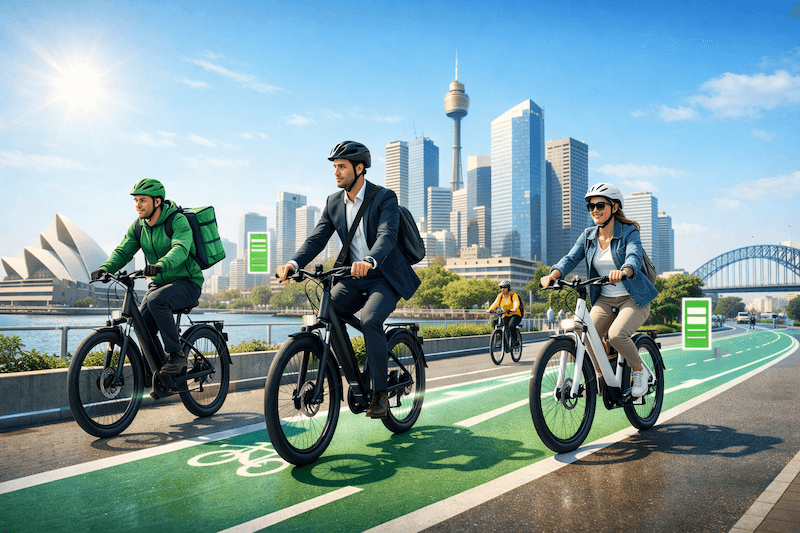
Australia’s transport landscape is changing rapidly. Rising fuel costs, growing urban congestion, and sustainability targets are pushing consumers toward smarter mobility solutions. As a result, e-bikes are gaining remarkable momentum across the country, creating significant opportunities for retailers, distributors, and electric mobility brands.
E-bikes are growing rapidly in Australia due to rising fuel prices, urban congestion, stronger environmental awareness, and improved cycling infrastructure. Annual sales have surged from roughly 9,000 units in 2017 to nearly 200,000 in 2022, with projections approaching 300,000 units per year. This rapid expansion makes the Australian e-bike market one of the fastest-growing segments in electric mobility, creating major opportunities for retailers, distributors, and online sellers.
To understand why demand is accelerating so quickly, it’s worth examining the market data, consumer trends, and business opportunities driving Australia’s e-bike industry.
Are E-Bikes Popular in Australia?
E-bike popularity in Australia has increased significantly over the past decade. Once considered a niche product for cycling enthusiasts, electric bikes are now becoming a mainstream mobility solution for commuters, recreational riders, and delivery services.
Major cities such as Sydney, Melbourne, and Brisbane are experiencing a steady increase in daily e-bike use. Many commuters are turning to electric bikes to avoid heavy traffic and reduce transportation costs. Compared with traditional bicycles, e-bikes offer pedal assistance that allows riders to travel longer distances with less physical effort.
Another factor behind the growth of e-bike popularity is demographic diversity. Younger urban professionals appreciate e-bikes as an efficient commuting option, while older riders value the additional support that electric motors provide. This broad consumer base is helping accelerate the adoption of electric mobility across Australia.
At the same time, government initiatives encouraging sustainable transportation have also contributed to rising interest. Various state-level programs and city infrastructure plans are increasingly prioritising cycling networks and shared mobility solutions, making e-bikes a practical alternative to cars for many urban journeys.
For businesses operating in the electric mobility sector, this rising consumer demand represents a strong signal that the Australian market is entering a high-growth phase.
How Many E-Bikes Are Sold in Australia?
The Australian e-bike market has experienced remarkable growth in recent years. According to industry research, annual sales increased from approximately 9,000 units in 2017 to around 197,000 units in 2022. Current projections suggest that annual sales could soon reach 250,000 to 300,000 units.
This surge in demand has pushed the value of the Australian e-bike industry close to one billion dollars, transforming it into one of the most promising segments within the broader electric mobility market.
Several factors are contributing to these rising sales figures. First, consumer awareness of electric mobility solutions is growing rapidly. Many Australians now see e-bikes as a practical transportation option rather than simply a recreational product.
Second, online sales channels are expanding quickly. Marketplaces such as Amazon, eBay, and Shopify-powered online stores are making it easier for consumers to compare models, access competitive pricing, and purchase e-bikes without visiting a physical store.
Third, the growth of micro-mobility services—such as delivery fleets, tourism rentals, and shared mobility programs—is increasing bulk purchases from businesses rather than individual consumers.
For retailers and distributors, these sales trends highlight a clear opportunity to scale their presence in a market that is still far from saturation.
Why Is the Australian E-Bike Market Growing So Fast?
Several powerful trends are accelerating the growth of the e-bike industry in Australia.
Urban Congestion
Australia’s largest cities face increasing traffic congestion, particularly during peak commuting hours. E-bikes provide a convenient alternative for short to medium-distance travel, allowing riders to bypass traffic and reduce commute times.
In many urban areas, cycling routes are becoming faster and more efficient than driving, especially during busy periods.
Rising Fuel Costs
Fuel prices have risen significantly in recent years, making traditional car commuting more expensive for many households. E-bikes offer a cost-effective alternative, with minimal operating costs and no need for petrol.
Over time, many consumers realise that switching to an e-bike for daily commuting can significantly reduce their transportation expenses.
Expanding Cycling Infrastructure
Australian cities are investing heavily in cycling infrastructure. Dedicated bike lanes, improved cycling paths, and safer road designs are encouraging more people to consider cycling as part of their daily routine.
As infrastructure continues to improve, the practicality of e-bikes as a primary commuting option increases.
Environmental Awareness
Environmental sustainability is another major driver of e-bike adoption. Many Australians are becoming more conscious of their carbon footprint and looking for ways to reduce emissions in their daily lives.
E-bikes produce far fewer emissions than cars and contribute to cleaner urban environments, making them an attractive solution for environmentally conscious consumers.
Post-Pandemic Mobility Trends
The COVID-19 pandemic changed how many people approach transportation. With increased interest in outdoor activities and independent mobility, e-bikes gained popularity as a flexible alternative to public transport.
Even as restrictions have eased, this behavioural shift has continued to support strong demand for electric bikes.
Why Are E-Bikes Expensive in Australia?
Despite their growing popularity, e-bikes in Australia often carry higher price tags compared with traditional bicycles. Several factors contribute to this pricing structure.
One key reason is the technology involved in electric mobility systems. High-quality e-bikes require advanced motors, durable frames, and reliable battery systems capable of delivering consistent performance.
Battery technology is particularly important. Lithium battery packs account for a significant portion of the total cost of an e-bike, as they must deliver long-range performance while maintaining safety and durability.
Import logistics also affect pricing. Many e-bikes and components are manufactured overseas, which means shipping costs, import duties, and distribution expenses can add to the final retail price.
However, many consumers view e-bikes as a long-term investment. When compared with the costs associated with car ownership—fuel, insurance, and maintenance—electric bikes can still provide strong economic value.
What Challenges Does the E-Bike Industry Face?
While the e-bike market in Australia is expanding rapidly, the industry also faces several challenges that businesses must navigate carefully.
One issue is safety awareness. As e-bike adoption grows, regulators and local governments are paying closer attention to safety standards, battery regulations, and rider behaviour.
Another challenge involves product quality variations. The rapid growth of the industry has attracted many new manufacturers, and not all products meet the same quality standards. Retailers and distributors must ensure that they source reliable components and trusted technology.
Supply chain stability can also impact the industry. Global logistics disruptions, component shortages, and shipping delays may affect product availability and pricing.
Finally, consumer education remains important. Many potential customers still have questions about e-bike performance, battery safety, and maintenance requirements.
Businesses that address these challenges proactively will be better positioned to succeed in the long term.
What Opportunities Does the E-Bike Boom Create for Retailers and Distributors?
Despite these challenges, the growth of the Australian e-bike market presents substantial opportunities for businesses across the electric mobility ecosystem.
Retail Expansion
Specialised e-bike retailers are emerging in many Australian cities. These stores focus exclusively on electric mobility products, offering expert advice, maintenance services, and product demonstrations.
As consumer demand increases, more retailers are entering this specialised segment.
Online Sales Channels
E-commerce is playing a major role in the expansion of the e-bike market. Online platforms allow retailers to reach customers across the country without requiring large physical store networks.
This trend benefits sellers using platforms such as Amazon, eBay, and Shopify, as well as independent e-bike brand websites.
Fleet and Commercial Applications
Commercial use cases are also expanding rapidly. E-bikes are increasingly used for:
- Food delivery services
- Tourism and rental fleets
- Corporate mobility programs
- Last-mile logistics operations
These commercial applications often require large fleet purchases, creating valuable opportunities for distributors and wholesalers.
Distribution Partnerships
As international e-bike brands enter the Australian market, many seek reliable distribution partners to manage local logistics, retail networks, and service support.
This opens the door for wholesalers and distributors to build strong partnerships with global manufacturers.
How Can Businesses Capture the Australian E-Bike Market?
Companies looking to succeed in the Australian e-bike market should focus on several key strategies.
First, building relationships with reliable component suppliers is essential. High-quality batteries, motors, and control systems are critical to product performance and consumer trust.
Second, businesses should prioritise after-sales service and technical support. Maintenance services, spare parts availability, and warranty programs help build long-term customer loyalty.
Third, developing strong distribution networks can accelerate market growth. Retail partnerships, online sales channels, and regional distributors all play important roles in expanding market reach.
Finally, businesses that invest in advanced battery technology and efficient power systems will be better positioned to meet the growing demand for reliable electric mobility solutions.
Australia’s e-bike industry is entering a rapid growth phase driven by changing mobility needs, rising fuel costs, and increasing environmental awareness. For retailers, distributors, and electric mobility brands, this expanding market offers a powerful opportunity to build profitable businesses within one of the fastest-growing segments of the transportation sector.
Partner With Battelio to Power the Future of E-Bike Mobility
As the Australian e-bike market continues to expand, businesses need reliable partners for high-performance battery solutions and scalable supply chains. Battelio provides advanced lithium battery technology designed specifically for modern electric mobility.
Whether you are an e-bike brand, distributor, retailer, or startup entering the market, Battelio can support your growth with dependable battery systems and industry expertise.
Explore partnership opportunities and discover how Battelio can help power the next generation of e-bike innovation.