
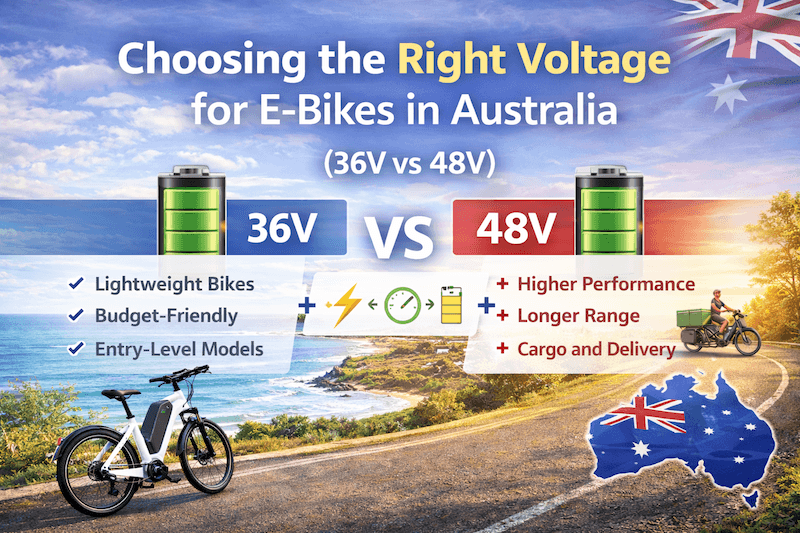
As the electric bike market in Australia continues to expand, choosing the right battery voltage has become an important decision for e-bike manufacturers, distributors, and retailers.
Two of the most common battery systems used in modern electric bikes are 36V and 48V lithium battery packs. Each option offers different advantages depending on the type of e-bike, riding conditions, and performance requirements.
For businesses developing or selling electric bikes in Australia, understanding the differences between these voltage systems can help ensure better product positioning and rider satisfaction.
This guide explains how 36V and 48V e-bike batteries compare and which option may be best suited for the Australian market.
Understanding E-Bike Battery Voltage
Battery voltage determines how much electrical potential energy a battery system can deliver to the motor.
In general terms:
- Higher voltage can provide more power output
- Lower voltage systems are often lighter and more energy efficient
Most electric bikes globally operate on one of these common battery platforms:
- 36V battery systems
- 48V battery systems
Both options are widely used, but they serve slightly different purposes depending on riding needs.
36V E-Bike Batteries: A Proven Standard
36V systems have been used in electric bikes for many years and remain popular for certain types of applications.
Typical characteristics include:
- Lower power output
- Good energy efficiency
- Lightweight battery packs
- Cost-effective battery solutions
36V batteries are commonly used in:
- Lightweight commuter e-bikes
- Entry-level electric bikes
- Urban city bikes
- Folding e-bikes
For short urban trips and moderate riding conditions, a 36V system can provide reliable performance.
However, for longer distances or higher power demands, some riders prefer higher voltage options.
48V E-Bike Batteries: Higher Power and Performance
48V battery systems have become increasingly popular in modern e-bikes due to their improved performance capabilities.
Advantages of 48V systems include:
- Higher motor power output
- Stronger acceleration
- Better climbing ability
- Higher potential riding speed
These benefits make 48V batteries ideal for:
- Long-distance commuting
- Electric cargo bikes
- Delivery and fleet bikes
- Performance-oriented e-bikes
Because of these advantages, many new e-bike models in Australia are moving toward 48V battery platforms.
Voltage and Riding Range
Voltage itself does not determine range alone — battery capacity also plays a key role.
However, higher voltage systems can often support more powerful motors and larger battery capacities, which can extend riding range under certain conditions.
For example:
- 36V systems are often paired with 10Ah – 14Ah batteries
- 48V systems commonly use 14Ah – 20Ah batteries
In markets like Australia where riders frequently travel longer distances, higher-capacity 48V batteries are becoming increasingly common.
Why 48V Systems Are Growing in Australia
Several factors explain why many e-bike manufacturers are adopting 48V systems for the Australian market.
Longer commuting distances
Many Australian cities have larger suburban areas, which means riders often travel longer distances.
Higher performance expectations
Riders increasingly expect faster acceleration and stronger motor performance.
Cargo and delivery use
Electric cargo bikes and delivery fleets require more power to handle heavier loads.
Because of these factors, 48V battery systems provide a practical balance of power, efficiency, and range.
When 36V Batteries Still Make Sense
Despite the rise of 48V systems, 36V batteries remain suitable for several types of e-bikes.
They are often preferred for:
- Lightweight urban commuter bikes
- Budget-friendly electric bikes
- Folding or compact e-bike designs
- Riders who travel shorter distances
For brands targeting entry-level markets or lightweight designs, 36V battery packs can still be a very effective solution.
Choosing the Right Voltage for Your E-Bike Product
For e-bike manufacturers and distributors entering the Australian market, selecting the right battery voltage depends on several factors.
Key considerations include:
- Target rider profile
- Expected riding range
- Motor power requirements
- Frame design compatibility
- Battery capacity options
Many companies today offer multiple product models using different voltage systems in order to serve a wider range of customers.
Working with an experienced battery supplier can help businesses optimize voltage, capacity, and battery configuration for their products.
The Importance of Reliable Battery Manufacturing
Regardless of whether an e-bike uses a 36V or 48V battery system, the quality of the battery pack remains one of the most important factors for long-term reliability.
High-quality battery packs typically include:
- Premium lithium battery cells
- Advanced battery management systems (BMS)
- Thermal protection mechanisms
- Strict manufacturing quality control
Reliable battery design helps ensure safe operation, longer lifespan, and consistent performance.
Custom Lithium Battery Solutions for E-Bikes
If your company is developing electric bikes for the Australian market, choosing the right battery voltage and capacity is essential for product performance.
Battelio provides:
- Custom lithium e-bike battery pack design
- 36V and 48V battery solutions
- OEM battery manufacturing
- Reliable supply for global e-bike brands
Our team works closely with e-bike companies to deliver battery systems optimized for real-world riding conditions.
👉 Contact us today to discuss your e-bike battery project.