
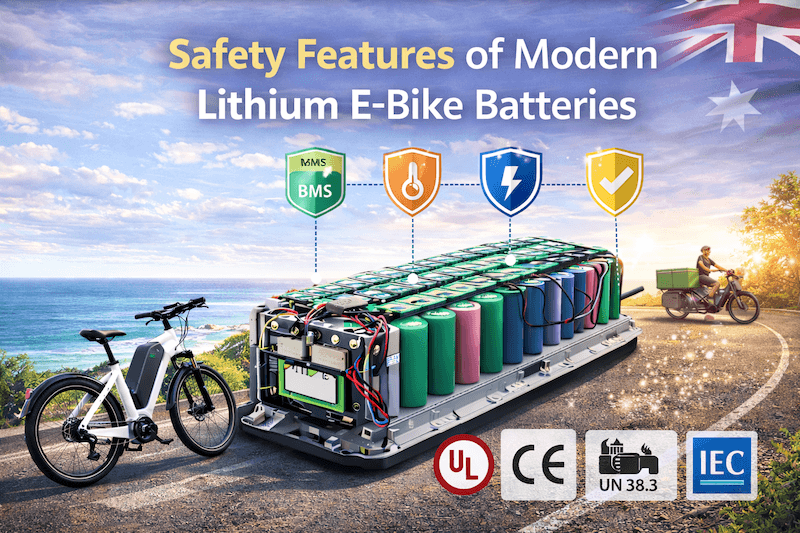
As electric bikes continue to gain popularity across Australia, safety has become one of the most important considerations for manufacturers, distributors, and riders.
Modern lithium battery technology has significantly improved over the past decade. Today’s e-bike batteries are designed with multiple layers of protection to ensure reliable and safe operation under a wide range of riding conditions.
For businesses involved in the electric mobility industry, understanding the safety features of lithium e-bike batteries is essential when selecting a battery supplier or developing new e-bike models.
This article explores the key safety technologies used in modern lithium e-bike batteries and why they matter for product reliability.
Why Battery Safety Matters for E-Bikes
Lithium batteries provide high energy density, making them ideal for electric mobility applications such as e-bikes, scooters, and cargo bikes.
However, because lithium batteries store large amounts of energy, they must be designed and manufactured with strict safety systems.
For e-bike brands and distributors, reliable battery safety helps ensure:
- Rider safety
- Long battery lifespan
- Reduced product liability risks
- Compliance with international regulations
A high-quality battery pack integrates both electronic protection systems and mechanical safety design.
Battery Management System (BMS)
One of the most important safety components in any lithium battery pack is the Battery Management System (BMS).
The BMS acts as the battery’s control center, continuously monitoring and regulating battery performance.
Key functions of a BMS include:
- Overcharge protection
- Over-discharge protection
- Short circuit protection
- Current limitation
- Temperature monitoring
- Cell balancing
By controlling how the battery charges and discharges, the BMS helps prevent unsafe operating conditions and extends the battery’s service life.
Thermal Protection and Temperature Monitoring
Temperature management is another critical safety feature in modern e-bike batteries.
Lithium cells perform best within a specific temperature range. Excessive heat or extremely low temperatures can affect performance and safety.
To manage temperature effectively, battery packs often include:
- Temperature sensors
- Automatic power reduction under high temperatures
- Thermal cutoff protection
- Heat-resistant battery housing
These systems help ensure the battery operates safely even in demanding environments such as hot summer conditions in Australia.
Overcharge and Over-Discharge Protection
Overcharging and deep discharge are two of the most common causes of battery damage.
Modern lithium battery packs include built-in safeguards that prevent these issues.
Overcharge protection stops the charging process when the battery reaches its maximum voltage.
Over-discharge protection prevents the battery from dropping below a safe voltage level, which could otherwise damage the cells.
These protections help maintain battery health and significantly improve overall reliability.
Short Circuit Protection
Electrical short circuits can occur due to wiring faults, external damage, or improper connections.
To prevent potential hazards, modern battery packs integrate short circuit detection systems.
If a short circuit is detected, the battery system immediately shuts down power output to prevent overheating or damage.
This rapid response mechanism plays an essential role in battery safety.
High-Quality Lithium Battery Cells
Safety also depends heavily on the quality of the battery cells used inside the pack.
Premium lithium battery cells typically offer:
- Stable chemical composition
- Higher energy consistency
- Lower risk of overheating
- Longer cycle life
Reputable battery manufacturers carefully select and test cells before assembling battery packs.
Using reliable cell suppliers is one of the most important steps in ensuring battery safety.
Durable Battery Pack Design
Beyond electronic protection systems, physical battery design also contributes to safety.
A well-designed battery pack typically includes:
- Shock-resistant casing
- Waterproof or water-resistant housing
- Secure internal cell structure
- High-quality connectors and wiring
These design elements help protect the battery from vibration, moisture, and environmental stress.
This is particularly important for electric bikes used in outdoor environments.
Manufacturing Quality Control
Even with advanced safety features, manufacturing quality remains a key factor in battery reliability.
Professional battery manufacturers implement strict quality control processes such as:
- Cell matching and testing
- Automated welding processes
- Electrical performance testing
- Aging and reliability tests
These procedures ensure that every battery pack meets consistent safety and performance standards.
The Future of E-Bike Battery Safety
As the electric mobility industry continues to grow, battery technology is evolving rapidly.
New safety innovations include:
- Smart BMS systems with real-time diagnostics
- Advanced thermal management materials
- Improved battery housing design
- Enhanced charging safety systems
These developments will continue to improve both the safety and performance of e-bike batteries in the coming years.
Reliable Lithium Battery Solutions for E-Bike Brands
For e-bike manufacturers and distributors, choosing a reliable battery partner is essential for delivering safe and high-quality products.
Battelio provides:
- Custom lithium e-bike battery pack design
- Advanced battery management systems (BMS)
- Strict manufacturing quality control
- OEM battery solutions for global e-bike brands
Our battery packs are designed to meet the performance and safety requirements of modern electric mobility.
👉 Contact us today to discuss your e-bike battery project.