
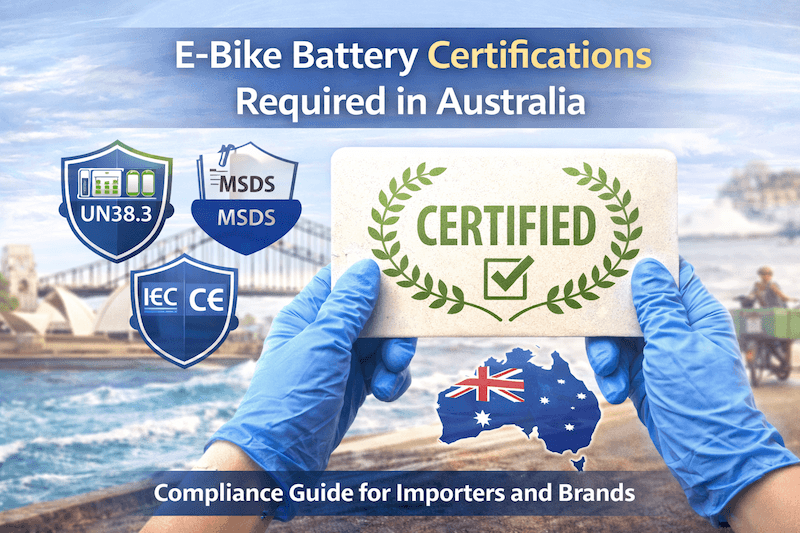
As electric bikes continue to grow in popularity across Australia, safety and compliance standards for lithium batteries have become increasingly important.
For e-bike brands, distributors, and importers, understanding the certification requirements for e-bike batteries is essential before bringing products into the Australian market.
Lithium batteries must meet specific transportation and safety standards to ensure safe shipping, storage, and operation.
This guide explains the most important battery certifications businesses should understand when importing or selling e-bike batteries in Australia.
Why Battery Certification Matters
Lithium-ion batteries store significant amounts of energy, which makes safety testing and certification essential.
Certification helps ensure that battery packs:
- Are safe to transport internationally
- Meet industry safety standards
- Perform reliably under normal operating conditions
- Reduce risks during shipping and usage
For importers and distributors, certified battery packs also help minimize regulatory issues and build trust with retailers and end customers.
UN38.3 Certification for Lithium Battery Transport
One of the most important certifications for lithium batteries is UN38.3.
UN38.3 is a transportation safety standard developed by the United Nations to ensure lithium batteries can be safely shipped by air, sea, or land.
To obtain UN38.3 certification, lithium batteries must pass a series of tests, including:
- Altitude simulation
- Thermal testing
- Vibration testing
- Shock testing
- External short circuit testing
- Overcharge testing
- Forced discharge testing
Without UN38.3 certification, lithium batteries cannot legally be transported through most international logistics channels.
For Australian importers, verifying that suppliers provide UN38.3 test reports and summaries is critical.
Material Safety Data Sheet (MSDS)
Another important document required for lithium battery transportation is the Material Safety Data Sheet (MSDS).
The MSDS provides essential information about the battery’s chemical composition and safety handling procedures.
Typical information included in an MSDS:
- Chemical composition
- Hazard identification
- Safe handling instructions
- Fire-fighting measures
- Storage recommendations
- Environmental considerations
Shipping companies and customs authorities often require MSDS documentation before lithium batteries can be transported internationally.
IEC Safety Standards for Lithium Batteries
Many lithium battery manufacturers follow IEC safety standards, which are internationally recognized electrical safety guidelines.
For lithium batteries used in electric mobility products, one commonly referenced standard is:
IEC 62133
This standard focuses on the safety of rechargeable lithium cells and battery packs used in portable electronic devices and mobility equipment.
Testing typically includes:
- Electrical safety testing
- Mechanical stress testing
- Environmental reliability testing
- Thermal performance testing
Compliance with IEC standards demonstrates that a battery pack meets globally recognized safety requirements.
CE Certification for European Markets
While CE certification is primarily required for products sold in Europe, many battery manufacturers also provide CE compliance documentation.
For companies exporting e-bikes or battery systems internationally, CE certification helps demonstrate compliance with European safety standards.
Even for Australian importers, CE certification can indicate that the battery pack meets strict product safety guidelines.
Additional Documentation for Battery Imports
Beyond certifications, several additional documents are often required when importing e-bike batteries.
These may include:
- Battery specification sheet
- Dangerous Goods Declaration
- Product test reports
- Shipping documentation for lithium batteries
Having complete documentation helps ensure smooth customs clearance and reduces delays during shipping.
Choosing a Certified Battery Supplier
For e-bike businesses operating in Australia, working with a reliable and experienced battery manufacturer is essential.
A professional battery supplier should provide:
- Complete certification documentation
- UN38.3 test reports and summaries
- MSDS documentation
- Reliable battery manufacturing processes
- International shipping experience
Choosing the right supplier helps ensure compliance with international standards and reduces potential import risks.
Supporting E-Bike Businesses with Reliable Battery Solutions
As the Australian e-bike market continues to expand, battery safety and certification will remain key factors for product success.
Brands and distributors that prioritize certified battery solutions can improve product reliability, reduce regulatory challenges, and strengthen customer trust.
Working with experienced lithium battery manufacturers helps ensure every battery pack meets both safety standards and market expectations.
Trusted Lithium Battery Manufacturing Partner
If your business is importing or developing electric bikes for the Australian market, choosing a certified battery supplier is essential.
Battelio provides:
- Custom lithium e-bike battery pack design
- OEM battery manufacturing
- Complete certification documentation
- Reliable supply for global e-bike businesses
Our battery solutions are designed to meet international safety standards and support e-bike brands worldwide.
👉 Contact us today to discuss your e-bike battery requirements.