
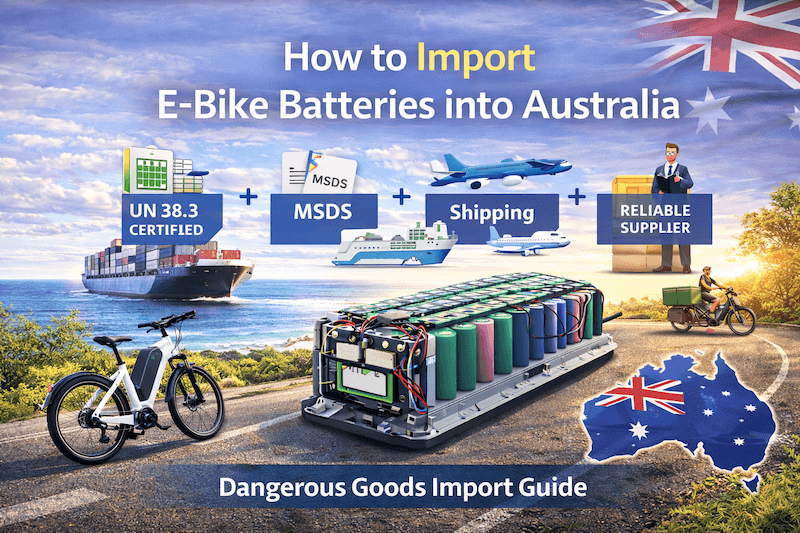
As electric bikes continue to grow in popularity across Australia, the demand for high-quality lithium e-bike batteries is increasing rapidly.
For e-bike brands, distributors, and retailers, importing battery packs from international manufacturers is often necessary to meet market demand and maintain competitive pricing.
However, lithium batteries are classified as dangerous goods for transportation, which means importing them requires careful attention to shipping regulations, safety certifications, and logistics planning.
This guide explains the key steps businesses should understand when importing e-bike batteries into Australia.
Understanding Lithium Battery Transport Regulations
Lithium batteries are regulated internationally because they store high amounts of energy and must be transported safely.
The most important global standard for lithium battery shipping is UN38.3 testing.
UN38.3 certification confirms that a lithium battery has passed a series of safety tests designed to simulate transportation conditions, including:
- Altitude simulation
- Thermal testing
- Vibration testing
- Shock testing
- External short circuit testing
- Overcharge testing
Without UN38.3 certification, lithium batteries cannot legally be shipped by air or sea.
For Australian importers, ensuring that your battery supplier provides UN38.3 documentation is essential.
Required Documentation for Battery Import
When importing lithium e-bike batteries into Australia, several documents are typically required.
These documents help ensure safe transportation and customs clearance.
Common documentation includes:
UN38.3 Test Summary
Confirms that the battery has passed transportation safety tests.
Material Safety Data Sheet (MSDS)
Provides information about chemical composition, hazards, and safe handling procedures.
Battery Specification Sheet
Details battery voltage, capacity, cell type, and performance specifications.
Dangerous Goods Declaration
Required for air and sea freight shipments of lithium batteries.
Working with an experienced battery manufacturer can simplify this process and ensure all documentation is prepared correctly.
Shipping Options for Lithium E-Bike Batteries
There are two primary shipping methods used for lithium battery transportation.
Sea Freight
Sea freight is the most common method for shipping e-bike batteries due to its lower cost and suitability for large shipments.
Advantages include:
- Lower shipping cost
- Suitable for bulk battery orders
- Stable logistics for large importers
However, shipping time is typically longer compared to air transport.
Air Freight
Air freight is faster but more expensive and subject to stricter regulations.
Air shipping is often used for:
- Sample shipments
- Small urgent orders
- Product testing before mass production
Because of strict aviation regulations, lithium battery packaging and labeling must follow IATA Dangerous Goods Regulations.
Battery Packaging and Labeling Requirements
Proper packaging is critical for lithium battery transportation.
Professional battery manufacturers follow international packaging standards to ensure safe shipment.
Typical packaging requirements include:
- Certified hazardous goods packaging
- Impact-resistant protective materials
- Lithium battery warning labels
- Proper dangerous goods documentation
These measures reduce risks during transport and ensure compliance with international logistics regulations.
Australian Market Considerations
Businesses importing e-bike batteries into Australia should also consider local market expectations.
Australian distributors and retailers typically prioritize:
- Reliable battery performance
- Long battery cycle life
- Strong safety systems
- Consistent supply availability
Working with a professional manufacturer helps ensure battery packs meet both safety requirements and market expectations.
Choosing a Reliable Battery Supplier
Selecting the right battery supplier is one of the most important decisions for e-bike businesses.
A reliable supplier should offer:
- Professional lithium battery pack design
- Strict manufacturing quality control
- International shipping experience
- Complete certification documentation
Experienced battery manufacturers can help simplify the entire import process and reduce potential risks.
Supporting E-Bike Businesses with Custom Battery Solutions
As the electric mobility market in Australia continues to expand, many companies are developing unique e-bike designs and product lines.
Custom battery pack solutions allow brands to optimize:
- Battery capacity
- Voltage systems
- Frame integration
- Performance characteristics
This flexibility helps e-bike companies differentiate their products in a competitive market.
Reliable E-Bike Battery Manufacturing Partner
If your company plans to import e-bike batteries for the Australian market, choosing the right manufacturing partner is essential.
Battelio provides:
- Custom lithium e-bike battery pack design
- OEM battery manufacturing
- International shipping support
- Reliable supply for global e-bike businesses
Our team works with distributors, brands, and mobility companies to deliver high-quality battery solutions for electric bikes.
👉 Contact us today to discuss your e-bike battery requirements.